

A lot of people hear the word “DevOps” and immediately think it’s only about tools like Docker or Kubernetes.
But when I started learning DevOps, I realized it’s much more than that.
A DevOps engineer is basically the person responsible for making sure applications move smoothly from development to production — while staying stable, scalable, and secure.
In this post, I’ll break down what a DevOps engineer actually does, the skills required, and what a typical day in the role looks like.
What is DevOps?
DevOps is a combination of:
- Development
- Operations
The goal is simple:
👉 Build, test, deploy, and manage applications faster and more reliably.
Instead of developers and operations teams working separately, DevOps helps both sides collaborate more efficiently.
What Does a DevOps Engineer Actually Do?
One of the biggest responsibilities is acting as a bridge between:
- Developers writing code
- Operations teams managing infrastructure
A DevOps engineer helps automate and streamline the entire deployment process.
CI/CD Pipelines
One of the most important parts of DevOps is setting up CI/CD pipelines.
CI/CD stands for:
- Continuous Integration
- Continuous Delivery/Deployment
Why CI/CD Matters
Instead of manually deploying applications every time code changes, pipelines automate the process.
Typical flow:
- Developer pushes code
- Pipeline runs tests
- Application gets built
- Deployment happens automatically
This reduces:
- Manual errors
- Downtime
- Deployment delays
Docker & Containers
Most modern applications today use containers.
Docker helps package:
- Application code
- Dependencies
- Runtime environment
into a single container.
This solves the classic problem:
"It works on my machine."
because containers behave consistently across environments.
Kubernetes & Orchestration
Once applications grow, managing containers manually becomes difficult.
This is where Kubernetes comes in.
Kubernetes helps:
- Manage containers
- Scale applications
- Handle failures
- Perform rolling updates
It’s widely used in modern cloud environments.
Infrastructure as Code (IaC)
Earlier, infrastructure was configured manually.
Now DevOps engineers use Infrastructure as Code tools like:
- Terraform ( I have a full video series on my channel)
- CloudFormation
to provision infrastructure using code.
Why IaC is Important
Instead of manually creating servers every time, you can define infrastructure in configuration files.
Benefits:
- Faster setup
- Consistency
- Version control
- Easier recovery
Cloud Platforms
Most DevOps work today happens in the cloud.
Popular providers:
- Amazon Web Services
- Microsoft Azure
- Google Cloud
For beginners, AWS is usually a good place to start because of its large ecosystem and learning resources.
Linux Skills Are Non-Negotiable
One thing I realized quickly while learning DevOps:
Linux is everywhere.
Most cloud servers run Linux.
Basic commands become part of daily work:
ls
cd
top
systemctl
journalctl
Even simple troubleshooting often starts from the Linux terminal.
Git & Version Control
Git is another essential skill.
DevOps engineers work closely with source code repositories.
Common tasks:
- Pull requests
- Branch management
- Merge conflict handling
- CI/CD integration
Without Git knowledge, DevOps becomes difficult.
Networking Basics
Networking is extremely important in DevOps.
You should understand:
- DNS
- IP addresses
- Ports
- TCP vs UDP
- Load balancing
A lot of deployment issues are actually networking problems.
Security & DevSecOps
Modern DevOps also includes security.
This is often called DevSecOps.
Some common responsibilities:
- Managing IAM permissions
- Securing secrets
- Vulnerability scanning
- Applying least privilege access
Security is now part of the deployment pipeline itself.
Monitoring & Observability
Applications need to run reliably 24/7.
DevOps engineers use monitoring tools like:
- Prometheus
- Grafana
- CloudWatch
to track:
- CPU usage
- Memory
- Errors
- Application health
Monitoring helps detect problems before users notice them.
A Realistic Day in DevOps
A normal day usually includes:
- Stand-up meetings
- Checking alerts
- Monitoring dashboards
- Fixing deployment issues
- Debugging pipelines
- Rolling updates
- Writing documentation
Some days are calm.
Some days involve production incidents at unexpected times.
That’s part of the job.
Real Learning Tip
One thing I noticed while learning DevOps:
Watching tutorials alone is not enough.
The real learning happens when:
- Pipelines fail
- Containers crash
- DNS breaks
- Deployments stop working
Troubleshooting teaches a lot.
Is DevOps a Good Career?
Yes — especially if you enjoy:
- Problem-solving
- Automation
- Cloud technologies
- Infrastructure
DevOps skills are widely used across startups and enterprise companies.
Full Video Walkthrough
I also created a complete video explaining:
- What DevOps engineers do
- CI/CD workflows
- Kubernetes usage
- Monitoring
- Infrastructure as Code
- DevSecOps concepts
- Daily responsibilities
along with practical explanations and real-world examples.
Watch the full video walkthrough here:
Final Thoughts
DevOps is not just about learning tools.
It’s about understanding how systems work together:
- Infrastructure
- Applications
- Security
- Automation
- Monitoring
The more practical experience you get, the easier these concepts become.
What You Should Do Next
If you’re starting DevOps:
- Learn Linux first
- Practice Git daily
- Build small cloud projects
- Learn Docker and Kubernetes gradually
Try building things instead of only watching tutorials.
That approach makes a huge difference.
👉 Bonus Tip
Don’t try learning every DevOps tool at once.
Focus on:
- Fundamentals
- Hands-on projects
- Troubleshooting
That builds much stronger understanding over time.
Related Guides
If you’re learning DevOps, also check:
- Docker Beginner Guide
- Kubernetes Errors Explained
- AWS S3 + CloudFront Setup
- DevOps + Cyber Security Roadmap
- AWS WAF Explained
About the Author
Madhukar Reddy is a DevOps engineer focused on AWS, Docker, Kubernetes, cloud infrastructure, and cyber security. He shares practical cloud and DevOps content based on hands-on learning, real-world troubleshooting, and deployment experience.

Related articles
 DevOps
End-to-End DevOps Project for Resume | GitHub Actions + AWS + Docker + EKS
People understand tools differently: A lot of people understand individual tools separately. They may know: but struggle to connect everything together into…
 Linux
Linux
Linux User Setup & Non-Interactive Shell Explained | Real DevOps Security Practice
When people first start learning Linux for DevOps, user management often feels very basic. Commands like: seem simple initially. But once you…
 AWS
AWS
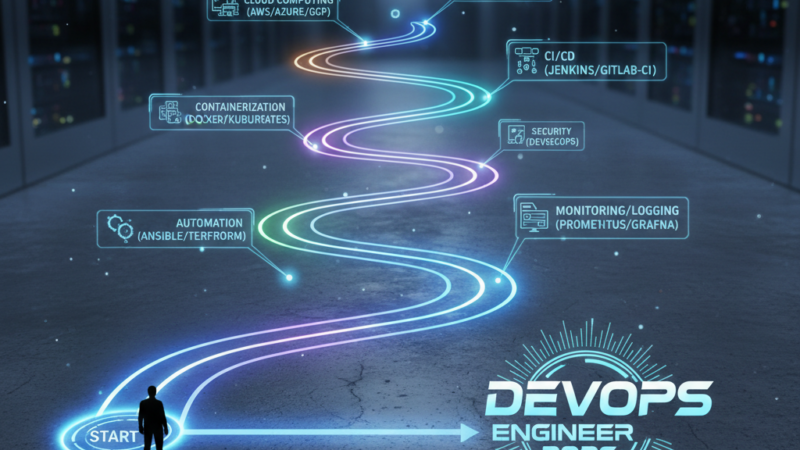
DevOps Roadmap 2026 | What You Should Actually Learn to Become a DevOps Engineer
A lot of people starting DevOps get stuck because they try learning everything at once. One day it’s Docker.Next day it’s Kubernetes.Then…